
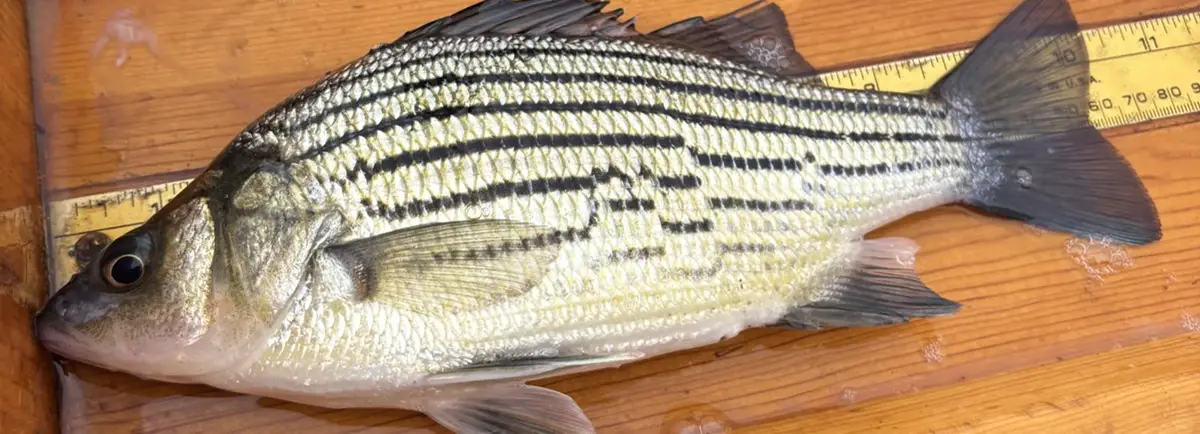


The 2015 DNR Tuma Lake Fish Survey Report is now ready for review.
2015 Silver Lake Fish Survey
Feb. 24, 2016–The 2015 DNR Silver Lake Fish Survey is now available for review.
2015 Assembly Bill 600
Dec. 10, 2015 − Introduced by Representatives JARCHOW, ALLEN, CRAIG, CZAJA, HUTTON, KNODL, NYGREN, PETERSEN and TITTL, cosponsored by Senators LASEE, LEMAHIEU, NASS, STROEBEL and KAPENGA. Referred to Committee on Environment and Forestry. Assembly Bill 600 makes various changes to the regulation of navigable waters, artificial water bodies, wetlands, and nonpoint source pollution.
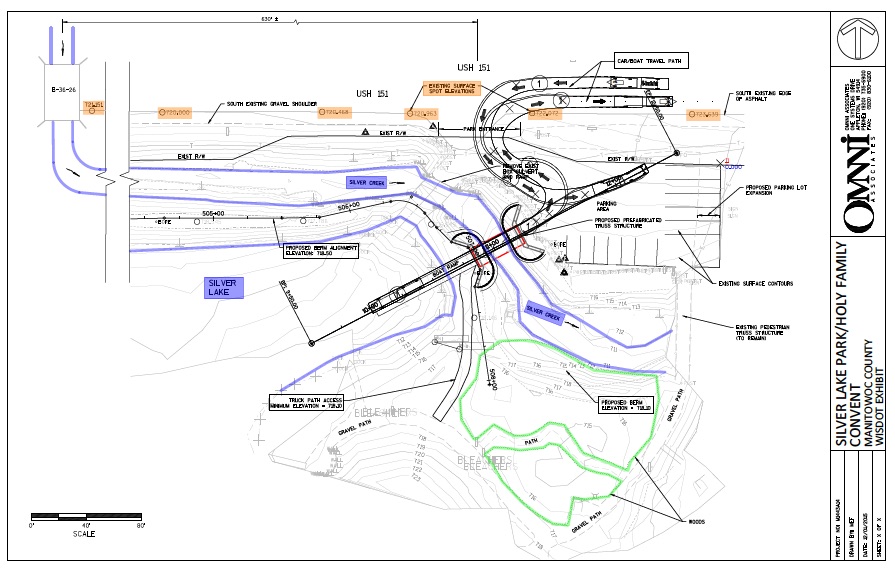
Preliminary Plan of Channel Reconfiguration
Shoreland Zoning Bill Update
From the Jan 22, 2016 Newsletter of Devin LeMahieu, Wisconsin State Senator, District 9
| Senate Bill 477: Shoreland Zoning |
I worked with the Counties association to draft this bill in order to clarify provisions of Wisconsin shoreland zoning program. This bill focuses on 4 provisions with the zoning program:
In the end, SB 477 will add flexibility and clarity to shoreland zoning ordinances. A public hearing was held on this bill and now needs to be voted on by the Senate Committee on Natural Resources and Energy. |
Senator LeMahieu’s Office: 323 South, State Capitol | Phone: (608) 266-2056 | P.O. Box 7882, Madison, WI 53707-7882
2015 Carstens Lake Fish Survey Report available
January, 2016–The 2015 DNR Carstens Lake Fish Survey Report is now available for review.
Invasive Species are Altering the Fisheries of Lake Michigan
January 2016 – The forecasts for anglers targeting Lake Michigan trout and salmon is dismal. The changing condition of the fishery was reflected last year in the lowest catch of trout and salmon in decades despite a 4% increase in angler effort. DNR 2015 creel survey showed anglers caught 269,978 trout and salmon, a drop of 11% from 2014 and lowest since at least 1990. Read more
MCLA January Meeting
Thursday, January 28 at 6:30pm
Members and the public are invited to attend this meeting at 4319 Expo Drive, Manitowoc.
Cory Zickert, of Wisconsin Lake and Pond Resource, LLC will present on lake aeration, strategies and methods, and protocols. MCLA and Manitowoc County Fish and Game Association currently coordinate aeration on Carsten’s Lake and Weyer’s Lake, but last year it became apparent that aeration on Silver Lake might be required to prevent winterkills. This meeting will give all Lakes Organizations a chance to have an open discussion of the issue regarding their lakes. Particular interests might be directed to Cory prior to the meeting using the contact form. As background to discussions, a report on the programs in Barron and Polk Counties is here posted.
Thin Ice Warnings [2016]
January 5, 2016–Residents on Silver Lake are reporting patches of hazardous thin ice due to the abnormally high activity of deep springs in the lake bed. Greater care than normal should be exercised when accessing the lake ice this year.
Read more
Thin Ice Warning [2016]
January 5, 2016–Residents on Silver Lake are reporting patches of hazardous thin ice due to the abnormally high activity of deep springs in the lake bed. Greater care than normal should be exercised when accessing the lake ice this year. John Durbrow, president of Manitowoc County Lakes Association points out that the ground froze very late this year, and we experienced very heavy rainfall throughout December. This late recharge of the subterranean water table will cause all spring fed lakes to be particularly dangerous, as the greater amounts of comparatively warm spring water rise to the ice capped surface.
Larrabee Sportsmans Club Veteran’s Benefit Oct 3!!!
Show your support at the Veteran’s Benefit
Saturday, October 3, 2015
Music, Food, Drink, Raffles! All Money Raised Stays in Manitowoc County!
All Vets Eat Free!
Click the “full story” link to view the event flyer Read more
Putting Stock in Manitowoc County
July 23, 2015 – Steven Hogler, DNR fisheries Biologist for Manitowoc County, has clarified several issues regarding fish stocking practices in the County lakes. His comments are presented below in interview format:
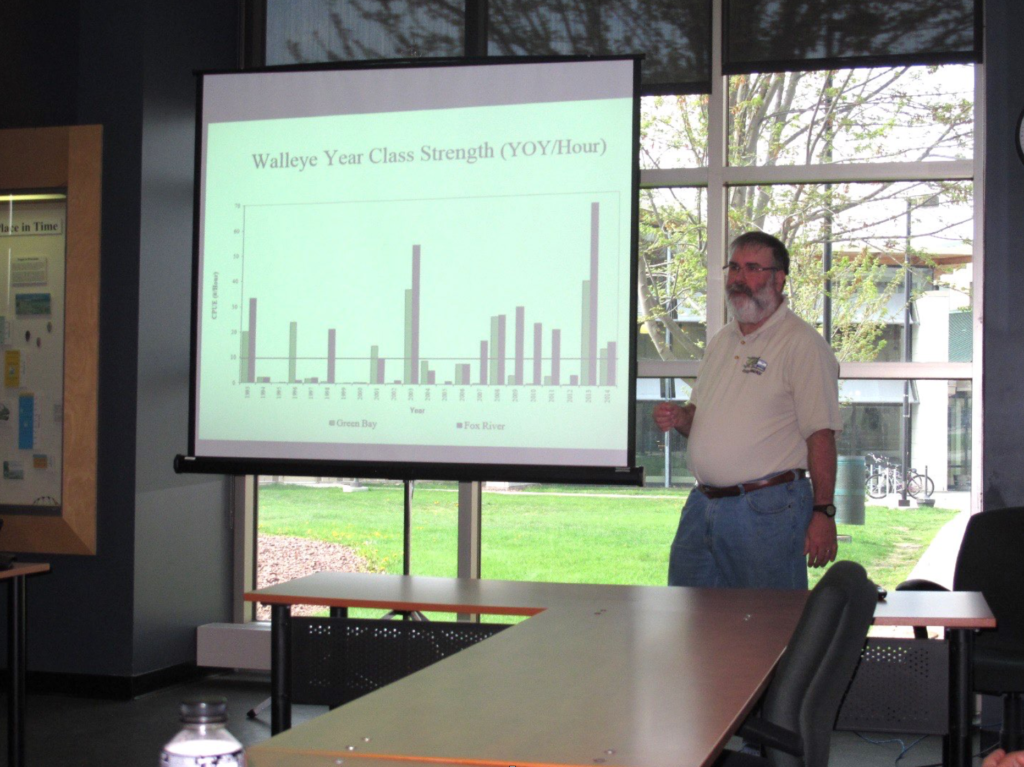
Steve Hogler, W-DNR Fisheries Manager
Q. Please explain the extent to which the DNR is stocking Manitowoc County Lakes, why, when, under what circumstances.
A. Lakes can be stocked to (1) to provide fishing opportunities within the biological capacity of the lake to support additional fish, (2) following major fish kills, (3) establishment or reestablishment of a population or (4) to act as biological control for out of balance fisheries among other reasons. In Manitowoc this means walleye stocking in seven lakes, northern pike stocking in two lakes, rainbow trout stocking in one lake on a regular basis and a mix of northern pike, largemouth bass, bluegill and yellow perch in several winterkill lakes. In addition streams are stocked with inland brown trout above the first dam and with Lake Michigan species below dams in into Lake Michigan tributary streams.
Q. Are there budget or policy limitations?
A. The availability of fish depends on hatchery space. How many and what kind of fish get stocked depends on policy. Since WDNR raises only gamefish, panfish are not available except from a Federal hatchery for winterkill lakes. Lake to lake transfers of panfish (common in the past) have been halted because of VHS.
Q. You prepare and share with us assessment reports of the fisheries reports for the lakes. Please describe the schedule of the lake inventories, or are they done on an as needed basis.
A. Lakes and rivers are surveyed on a rotational schedule unless a management need such as assessing a lake after a winterkill requires an immediate survey. Larger lakes (greater than 100 acres) or streams with trout or smallmouth bass are surveyed more often, every 4 to 6 years while other lakes and streams are surveyed every 8 to 10 years.
Q. I know you favor re-creation of a native population, is there a conflict between the interests wanting “put and take” exotics and your plan?
A. Yes, there are those that can’t move away from stocking policies of the 1930’s-1970’s where stocking was done indiscriminately. More recent fisheries science has found that this causes more harm than good hence the more restrictive current policies. While we favor stocking that creates or restores self-sustaining populations, DNR also stocks to enhance fishing opportunities in a limited number of lakes where and when it is appropriate and it does not cause negative impacts to fish populations already in the lake.
Q. Where do funds for stocking come from, how might that be increased?
A. I submit all DNR stocking quotas based on need and policy. Funds for stocking generally come from fishing license and stamp sales or from Sport Fish Restoration dollars although on occasion, funding comes from other sources as well. Increasing funding is only one part of stocking, hatchery space and people to run the hatcheries play an important role in how many fish are stocked.
Q. Can you expand on your plans to get to a sustainable, reproducible, population in the lakes?
A. Most lakes, probably over 80-90% do not need stocking since they have stable populations.
Q. Is there an application process to get state funded stock?
A. There are no applications, I submit the quotas, based on policy that outlines factors such as the number and age of the fish stocked, the type of stocking such as rehabilitation or recreation and the types of water that can be stocked. In some cases Lake associations can apply for stocking permits to buy fish from private hatcheries and stock fish in years when DNR does not stock or to stock panfish which DNR does not raise in State hatcheries.