
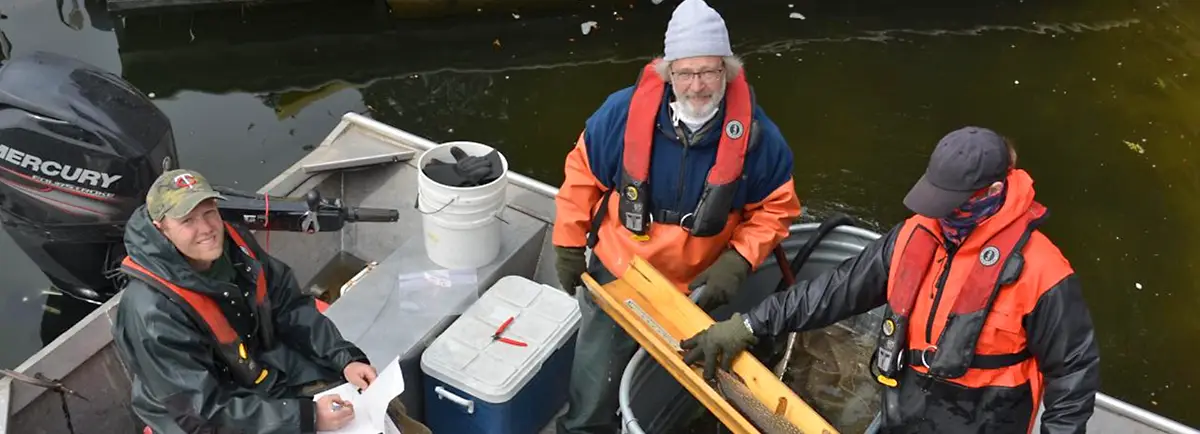
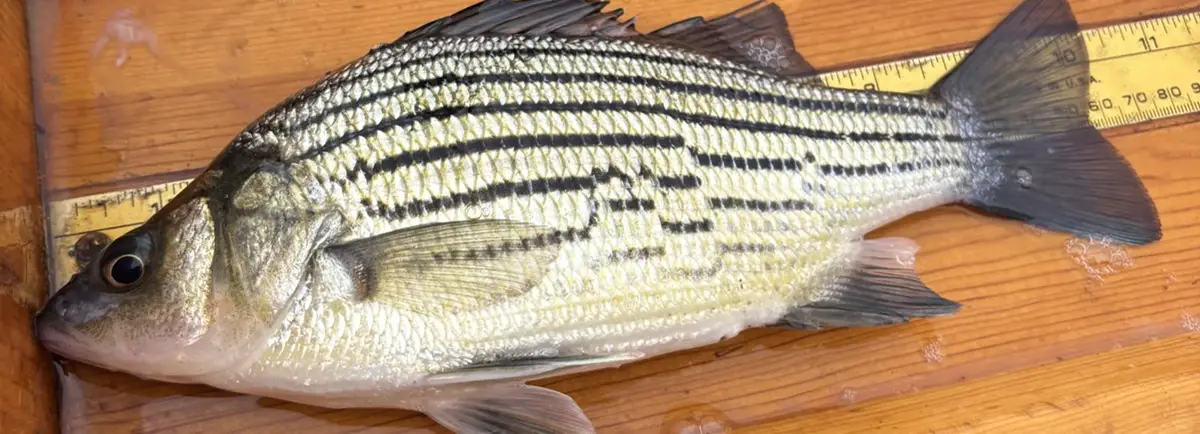


November 2016–Manitowoc County Lakes Association and The Manitowoc Fish and Game Protective Association are currently working on providing aeration systems for Weyers Lake and Silver Lake. Read more
Meet the Candidates Forum – Oct. 18th
Public Welcome!
Tuesday, October 18th at 6:30 PM
4319 Expo Drive (County Office Building) in Manitowoc – Room 300
Download this event flyer and share!
Assembly District 1: Rep. Joel Kitchens, Lynn Utesch
Assembly District 2: Mark Grams*, Rep. Andre Jacque
Assembly District 25: Ron Kossik*, Rep. Paul Tittl*
Assembly District 27: Nanette Bulebosh*, Rep. Tyler Vorpagel*
*confirmed attendance, others probable.
Please see http://legis.wisconsin.gov/ltsb/gisdocs/AssemblyMaps/Assembly_2015_17x22_withReps.pdf for a map of the respective districts.
The list of the most respected “prophets” of the environmental ethic shows that a preponderance, John Muir, Aldo Leopold, and Gaylord Nelson, either were from or resided in Wisconsin. At a recent conference, a speaker chided the audience that Wisconsin has monopolized the ecology movement, as she was obligated to three events in the State with-in the month. Manitowoc County is home to more sportsmen’s, conservation, and other clubs related to environmental issues that any other county in the State. Clearly, Wisconsin’s, and this County’s legacy of concern for environmental quality is long established and deeply rooted.
To facilitate harmony between representative governance and residents of Manitowoc County, the Manitowoc County Lakes Organization is hosting a forum wherein the candidates for the four assembly districts within the county are respectively requested to present their proposed response to the values espoused in the MCLA mission statement (above) and broader environmental concerns. Each candidate attending will introduce themselves and their positions, followed by a Q&A from the audience, and ending with a coffee and dessert mingle. This event is a wonderful opportunity to meet your future Representative!
We greatly appreciate the efforts the candidates are making to accommodate this MEET THE CANIDATES FORUM format. We hope you will join us.
“The Manitowoc County Lakes Association will protect and enhance the quality of area lakes and watersheds for the benefit of all.”
George Meyer to Address MCLA
 We are extremely pleased to have George Meyer addressing the Manitowoc County Lakes Association
 on Thursday, Sept 29, 2016 6:30pm.
This meeting was postponed due to illness. Please check back for new date.
Open to the public. Guests are encouraged to attend this timely presentation. George has been recognized for his effective and responsible tenure at the DNR, and remains a strong advocate of environmental policy and water protection in the State of Wisconsin. George is currently Executive Director of The Wisconsin Wildlife Federation, the only statewide organization dedicated to protecting fish and wildlife habitat, fishing, hunting, trapping, and other outdoor sporting and recreational opportunities. WWF develops and advances policies that protect fish and wildlife habitat, and that promote public access to lands and water for outdoor recreation. Previously, George’s career with the DNR spanned more than 30 years. An attorney, he led the DNR’s enforcement division for 10 years, and was appointed by Governor Thompson as Secretary, a position he held from 1993 to 2001. He has taught conservation and environmental policy at Lawrence University for two years.
To promote strong conservation policy, Wisconsin Wildlife Federation intends to:
- Work with members of Wisconsin State Legislature and occasionally members of the US Congress.
- Participate in rulemaking processes to ensure that the law is meaningfully implemented at the administrative level.
- Work in coalition with other organizations to develop and advance policies important to members.
Landing Blitz Planned for the July 4th Weekend
July 2016 – MCLA will once again participate in the Landing Blitz planned for the July 4th Weekend. Citizen volunteers and aquatic invasive species experts will be teaming up to educate boaters and conduct free boat checks during the weekend of July 4th at boat landings throughout Manitowoc County. The teams will inform the boaters so they do not accidentally spread Eurasian water-milfoil, zebra mussels, and other aquatic invasive species (AIS).
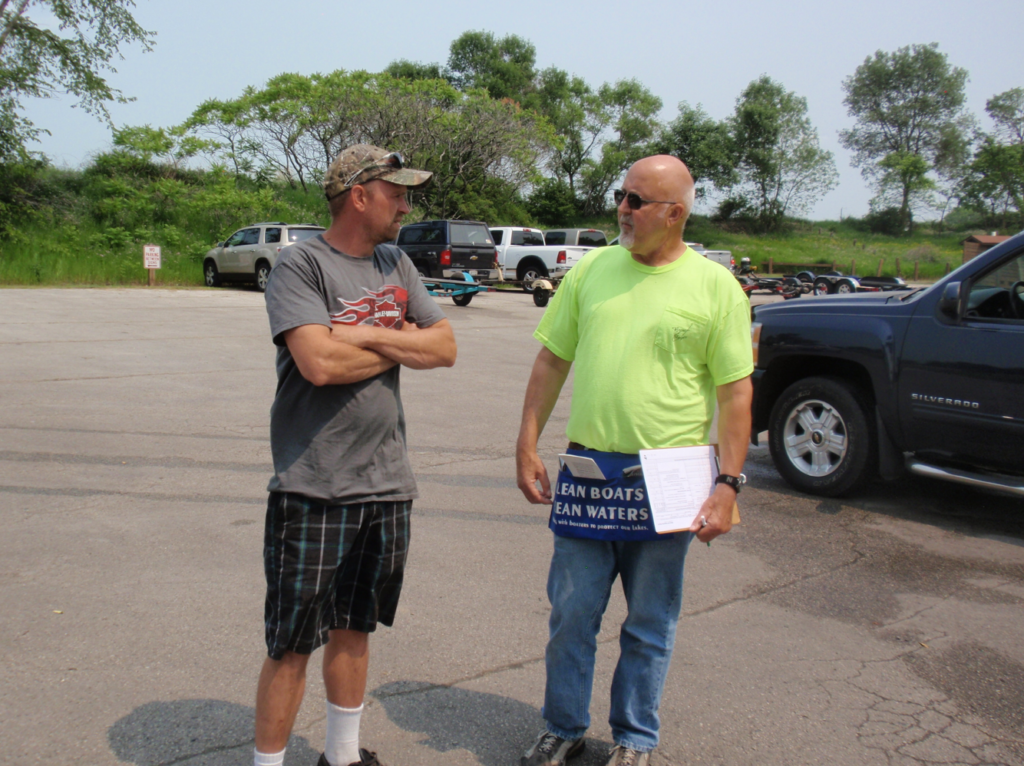
Ron LaFond (right) instructing boaters on Clean Boat Procedures to prevent the Spread of AIS.
Throughout the eighth annual Landing Blitz inspectors stationed at many high use boat landings from June 30th-July 3rd will help boaters understand Wisconsin’s invasive species laws and what steps to follow to avoid spreading invasive species.
During last year’s holiday, inspectors contacted 23,000 people and inspected over 10,000 boats across the entire state. Inspectors included citizen volunteers, state and local AIS staff, wardens and water guards, and numerous lake associations. They were organized by the Department of Natural Resources and the University of Wisconsin-Extension’s Clean Boats, Clean Waters program.
Invasive species can crowd out native species, disrupt lake ecosystems, interfere with boating, fishing and other recreation, and cause economic harm. The main way that invasive species and fish diseases such as viral hemorrhagic septicemia (VHS) spread to new waters is when boating and fishing equipment, or live fish or water is moved from one waterbody to another.
Inspectors will demonstrate the required prevention steps boaters must take, provide educational prompts to remind boaters of these steps, and talk about Wisconsin invasive species and VHS laws. Boaters found already practicing the prevention steps can again be rewarded with a free microfiber boating towel.
“Boaters are always delighted to get these towels and know they are doing the right thing,” – Tom Ward, Manitowoc County Lakes Association’s AIS coordinator.
Boaters, anglers, and others enjoying Wisconsin waters are required to:
INSPECT boats, trailers, and equipment.
REMOVE all attached aquatic plants and animals.
DRAIN all water from boats, vehicles, and equipment.
NEVER MOVE plants or live fish away from a waterbody. *
Volunteers and lake residents are invited to accompany inspectors. If you can help out with greeting boaters contact MCLA
UW Extension 2016 Shoreland Zoning Presentation
The Wisconsin Legislature has made major changes to shoreland zoning in 2015-16. These changes are explained in this video by Lynn Markham of The Center for Land Use Education at UW-Stevens Point:
1. Introduction to shoreland zoning and recent changes to required shoreland lot sizes
2. Changes to shoreland setbacks, vegetation protection and impervious surface standards
3. Changes to standards for buildings located close to the shoreline
Become an Aquatic Invasive Species Monitor!
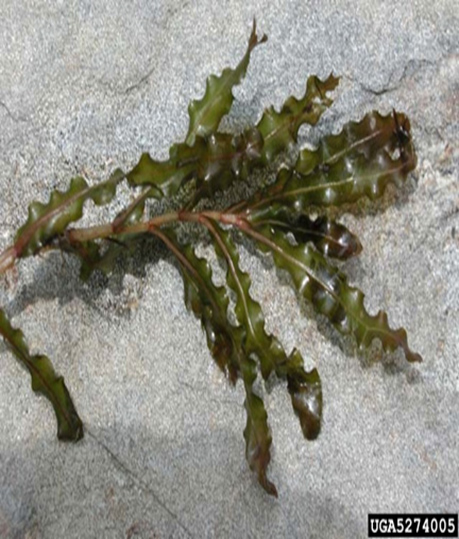 Invasive Species Lake Monitor Volunteers patrol our lakes looking for AIS so that if AIS comes into a lake, it can be caught at the early development stage. Most volunteers monitor for invasive plants, but some volunteers also monitor for rusty crayfish, zebra mussels and the Chinese and banded mystery snails.
Please consider helping! Attend the final monitor meeting of the season.
When: Monday, June 20th, 2016
Time: 6 PM to 8 PM.
Place: Woodland Dunes Nature Center located on Hwy 310 on the west edge of the city limits of Two Rivers. If you are on I 43, take the 310 exit and travel east to the TR City limits. The center is on the north side of the road locate in a brick renovated homestead.
Registration: Please call Woodland Dunes (920-793-4007 or Tom Ward’s cell 920-588-0047) to allow us to identify the amount of materials needed.
Read the memo from Tom Ward here: AIS Monitor Meeting Flyer
Bass and panfish spawning
5/26/16: Reports given at the membership meeting indicate that bass and panfish are spawning.
Curly Leaf Pond Weed Found on Little Gass Lake
May 2016 – Curly Leaf Pond weed was discovered at the boat landing on Little Gass Lake this spring by DNR staff. This is the first invasive species identified on little Gass lake. Read more
Special Panfish Regulations on Five Area Lakes
March 26, 2016 – Five Lakes in Manitowoc County have been selected by the DNR for special regulations on panfish to be effective beginning April 1, 2016. Those lakes are Bullhead, Long, Pigeon, English and Harpt Lake. A total of 94 lakes across the state were identified by biologists and anglers as underperforming – that is the mean length of bluegill and crappie is less than desirable but growth potential is good. The goal is to determine the best regulation that will increase the average size of bluegill and crappie on the selected lakes. Ultimately, a single regulation will be chosen and used to address similar lakes not meeting Panfish management goals. The effectiveness of each regulation will be evaluated in 2021. Read more
Larrabee Sportsmans Club Tractor Pull
The Pure Stock Antique Tractor Pull
June 4, 2016
Larrabee Sportsmans Club
click the “full story” link to view event flyer
2015 Point Creek Smallmouth Bass Survey Report
February 25, 2016 – The 2015 Point Creek Smallmouth Bass Survey Report is now available for review.
Select 2015 DNR Fish Surveys now available for review.
The following 2015 DNR Fish Surveys are now available for review.
- 2015 Carstens Lake Survey Report
- 2015 Tuma Lake Survey Report
- 2015 Silver Lake Survey Report
- 2015 Point Creek Smallmouth Bass Survey Report