The meeting minutes from the July 27, 2017 MCLA meeting are now available. The guest was Pete Tarnowski. He has made his presentation on the status Manitowoc County Parks available for download. In it, he discusses recent improvements at our lakes, as well as future plans. Please take a look! Read more
Category: mobile news
AIS training Aug 12 – Last chance!
If your lake no longer has a volunteer trained to monitor for Aquatic Invasive species, this is your last opportunity of the year to become a qualified monitor.
Monitors go out monthly to survey the lake for any new entries of invasive species. Early detection allows for a response to control the invasive before it spreads.
Pigeon Lake is hosting this training session
Saturday, August 12 at 1:00pm
on Pigeon Lake (9406 Pigeon Lake Road)
Tom Ward, AIS Coordinator for MCLA, will be conducting the training and handing out monitor materials.
Please email tomward@tm.net with any questions.
Clean Boats/Clean Water Blitz Coming!
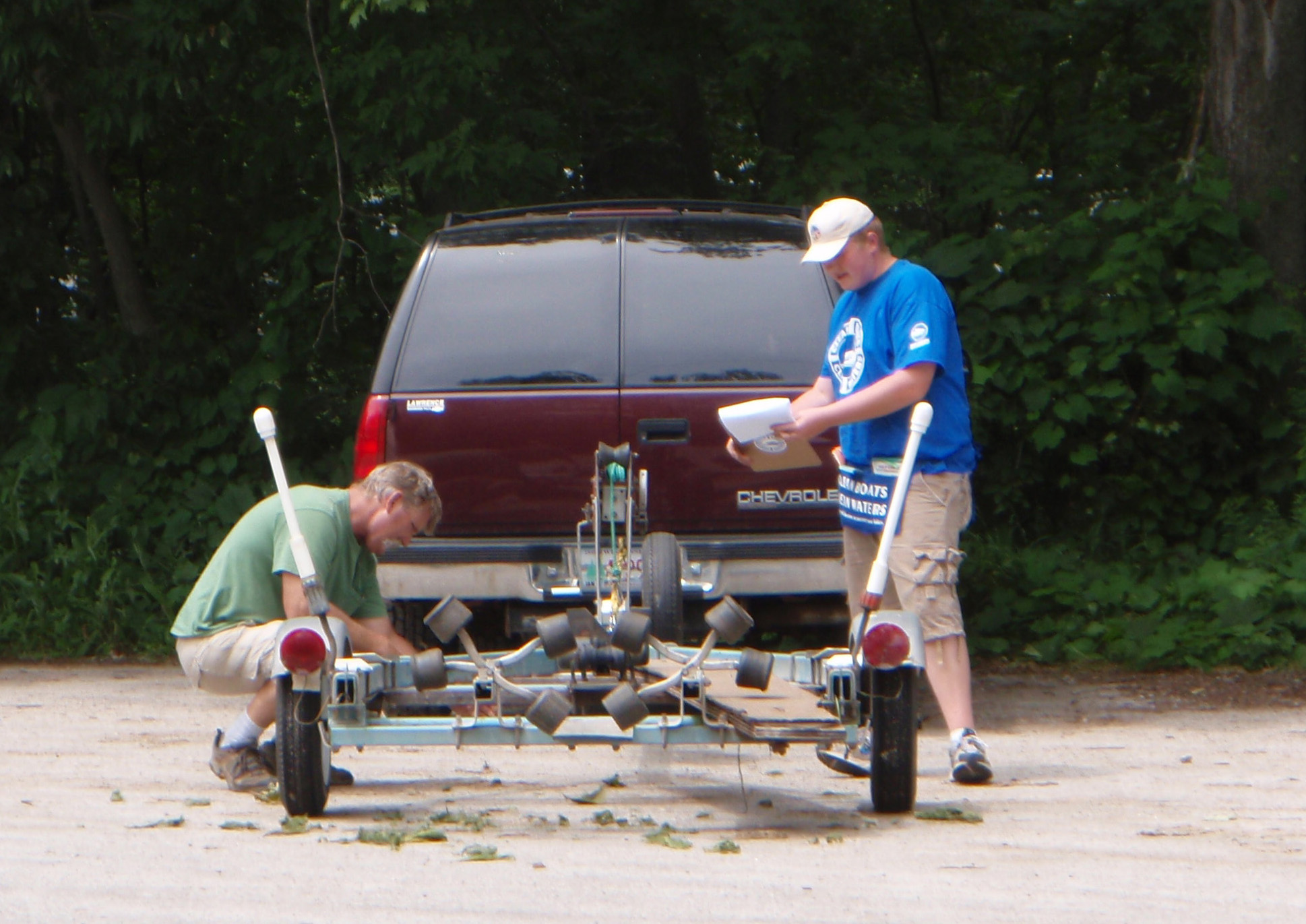
Joe Madison at work cleaning a trailer.
June 26, 2017—Since the Clean Boats/Clean Water Program was started in 2008 by MCLA, Tom Ward and his volunteers have engaged the boating community to reduce the potential for aquatic invasive species (AIS) infestation of the County lakes. The Clean Boats program has the goal to reduce and prevent the spread of invasive species by educating and training boaters. Boaters coming off, or about to enter, the County lakes have been informed of the dangers of invasive species, as well as the means of reducing the threat of invasives within the respective lakes. Tom and his crew have conducted boat inspections, handed out towels to increase AIS awareness, and distributed ice packs to stop the practice of moving water from lake to lake. Tom has also been the Invasive Species Coordinator for Manitowoc County, addressing a broad range of both terrestrial and aquatic invaders.
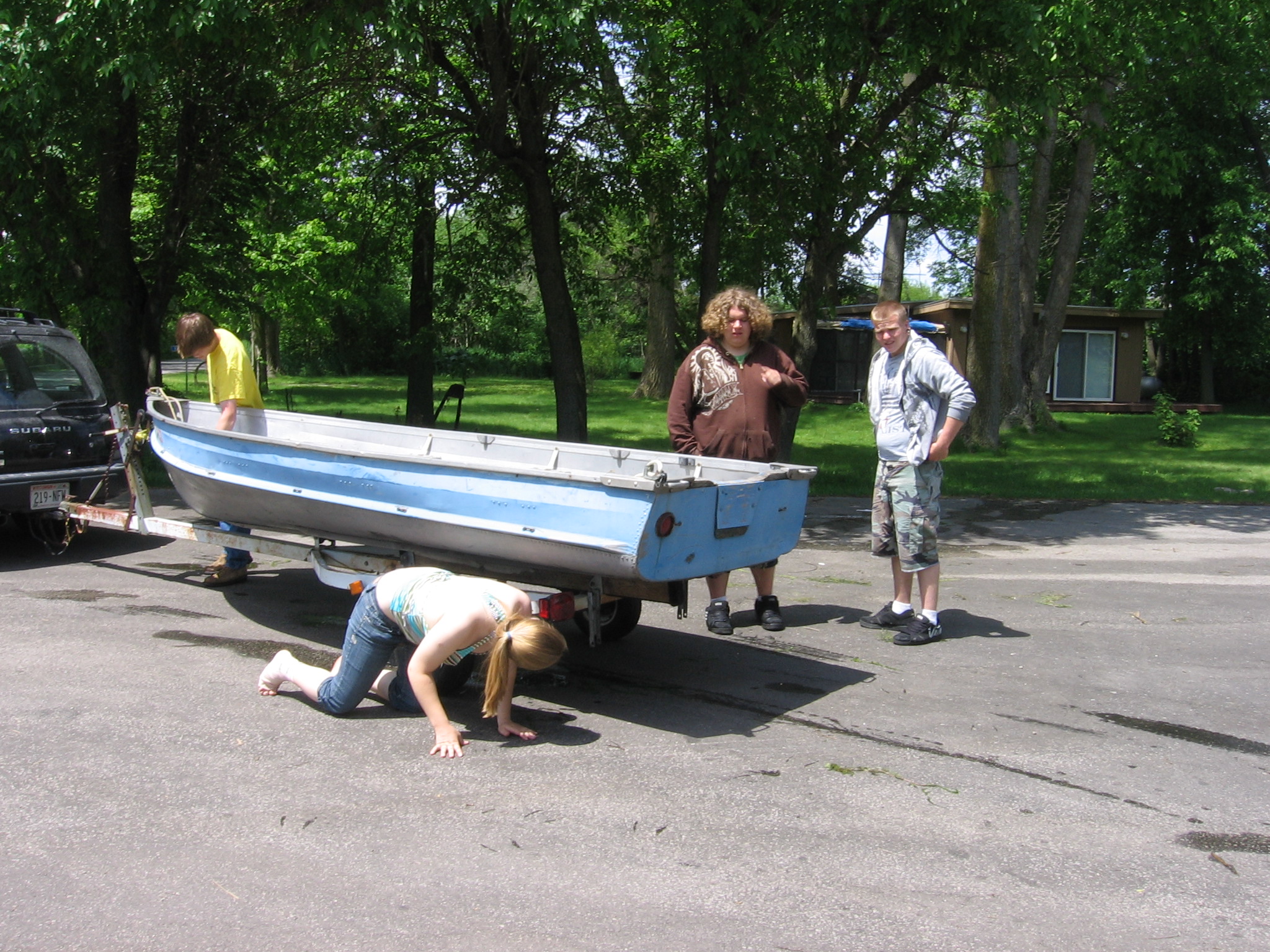
English Lake, young boaters cleaning.
All lakes are, by definition, negatively affected by Aquatic Invasive Species. AIS plants attached to boats or trailers, and AIS organisms carried to the next waterbody by boats or buckets multiply aggressively at their new home and disrupt the ecology and reduce the quality of the impacted lake. Many area lakes currently already harbor some invasives which should be prevented from migrating to other lakes, and future risks include many species coming in from other regions. In Tom’s words, ’Invasive plants and animals, like Curly Leaf Pondweed, Eurasian Watermilfoil, Spiny Water Fleas and Zebra Mussels, can spread easily by hitching a ride on boats and other equipment, including trailers, anchors, live-wells, buckets and bilges. A few boaters,’ Tom adds, ‘know more than I do, but some have no idea at all.’ Most have gained some knowledge, especially if they tried walking barefoot on beaches covered with Zebra Mussels.
The towels Tom hands out serve to wipe off what can be wiped when the boat is out of the water. The sequence of cleaning is important, to insure trailer and boat are both thoroughly cleansed. The ice packs are used to preserve the catch without taking home water, as the water from live wells carries AIS contaminants. Several lakes in Manitowoc County have cleaning stations with signs explaining what must be done, with brushes, boat hooks and spray containers with bleach solutions for sterilization of boats and engine compartments.
All hands on deck this 4th of July weekend to stop AIS in Wisconsin!

Tom Ward at Weyers Lake
Tom Ward invites us all to participate in the upcoming Clean Boats/Clean Water annual Landing Blitz:
Going boating this holiday? You may be one of thousands of Wisconsinites to be greeted by expert and volunteer “inspectors” at boat landings around the state, who will be sharing a simple but powerful message:
You have the power to protect our waters from aquatic invasive species.
This holiday weekend, June 30-July 4, 2017, is the ninth annual Landing Blitz, a statewide effort to remind boaters and other water lovers to use their power to stop the spread of aquatic invasive species, which pose great risks to the health of our lakes and fisheries. But boaters can also easily prevent this by taking the following simple steps every time they enter and leave a boat landing:
- Inspect your boat, trailer and equipment
- Remove all attached plants or animals
- Drain all water from boats, motors, live-wells and other equipment
- Never move live fish away from a waterbody
- Dispose of unwanted bait in the trash
- Buy minnows from a Wisconsin bait dealer, and use leftover minnows only if you will be using them on that same waterbody or if no lake or river water or other fish have been added to the container.
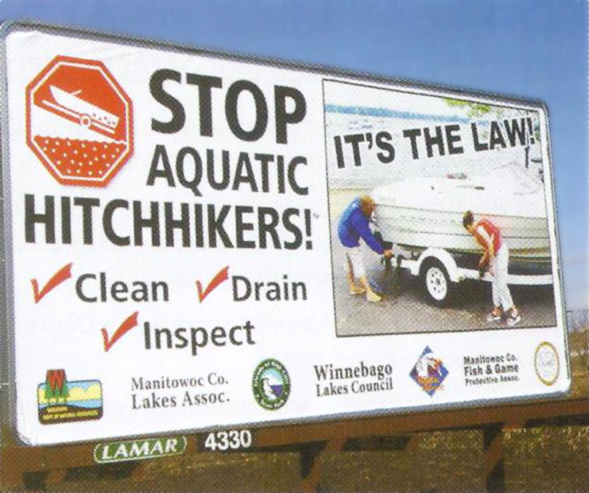 Following these steps also helps boaters comply with Wisconsin state law, which prohibits the transport of aquatic invasive species. Inspectors will be on hand at boat landings around Manitowoc County to give demonstrations of the prevention steps or answer questions about invasive species.
If you use social media, help us spread the word about the importance of aquatic invasive species prevention by posting your photos and messages using the hashtag #CleanBoatsCleanWaters.
You can also share where and how you protect our lakes and rivers from aquatic invasive species by contributing to a Story Map that will showcase photos and messages from water lovers around Wisconsin. Contributions can be made at this link: http://arcg.is/2o9YIU9
To learn more about invasive species and their impacts to Wisconsin’s waters and economy, visit http://dnr.wi.gov/topic/invasives/
The war against invasives will not be won, it is an effort requiring constant vigilance. After the end of the current three year successful boat inspection program, even more needed now, as the invasive species are spreading and reducing biodiversity, and affecting fishing and recreation, the future of funding requires a revisit and revision of the grant program which funded previous work, involving a regional approach.
Our waters are not separated by county lines! An educational grant as well as a grant for implementation will be pursued. We thank Tom for his dedication over the previous grant cycle. The work is not finished. Towns and property owners and their friends and families will also have to step up to take part if the initiatives are to be successful.
by Hanna Edelglass
Attention all AIS monitors – please attend May 25th MCLA meeting
Attention all AIS monitors and those interested in monitoring. Mark your calendars for Thursday May 25th, 6:30pm at the County Offices on Expo Drive, for the next MCLA meeting. Tom Ward will conduct a review of the photo documentation procedures and provide an ID book; it would be helpful to have a count before the meeting (email tomward@tm.net). AIS monitoring kits will be ordered from this meeting for the active monitor lakes and delivered on May 30, when Paul Skawinski conducts training on Cedar Lake.
The AIS monitoring has some significant updates and new equipment for our monitors.
Who Knows Your Lake?
by Hanna Edelglass
Have you ever wondered how sloshing around, ankle deep in water, on top of a sheet of ice, helps you to get to know your lake? We were drilling holes into the ice, angling for plants and small organisms, finding where the fish are and why they are there and each answer only brings more questions. Such as, why are these plants here? And what is their effect on the water, on fishing, on boating and swimming, property values, even the local economy? We explore and work to find out how all this relates to what flows into this lake, which can create positive or negative change, upsetting or healing its natural balance. This is the purpose of our scientific endeavor. I learnt some of that on the ice with Manitowoc County’s Cedar Lake residents and Paul Skawinski (an Aquatic Biologist and Outreach Specialist for UW-Extension) in February of this year. And yes, I wore warm, waterproof boots. Read more
New Interactive Watershed Mapping Tool
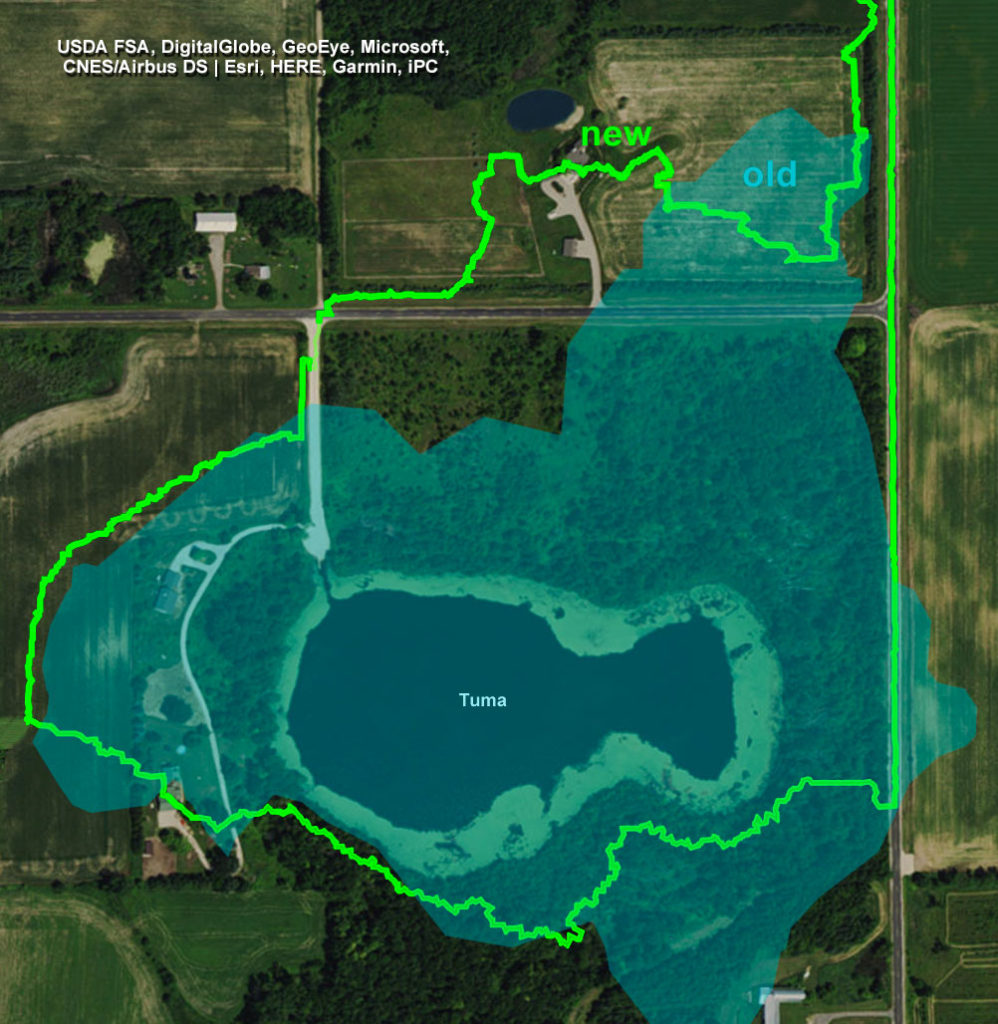 March 22, 2017. (Updated April 21, 2017). Bruce Riesterer, Resource Conservationist at the Manitowoc County Soil and Water Conservation Department, has created a new, interactive, watershed mapping tool.
Visit http://manitowoc.maps.arcgis.com/apps/View/index.html?appid=c38b2149d3b947eb9bd120f5480c4a1e to use it to view your lake’s watershed.
Private and public lake watersheds are displayed, with a choice of base maps that includes terrain, street maps, satellite and others.
The new mapping shows the watershed land area and boundaries quite clearly. Because the water quality of each lake is affected by things happening in this area, this new level of precision is quite helpful!
To the right is a great example of the new level of detail this tool provides, as evidenced by the watershed boundaries for Tuma Lake. The light blue area is the watershed according to previous maps. The bright green is the watershed as drawn by the new mapping tool.
The boundaries are now more accurate because of new lidar-generated elevation data recently made available.
On the actual mapping tool website (http://manitowoc.maps.arcgis.com/apps/View/index.html?appid=c38b2149d3b947eb9bd120f5480c4a1e) the user can zoom in to show an extreme level of detail, as shown in the second image.
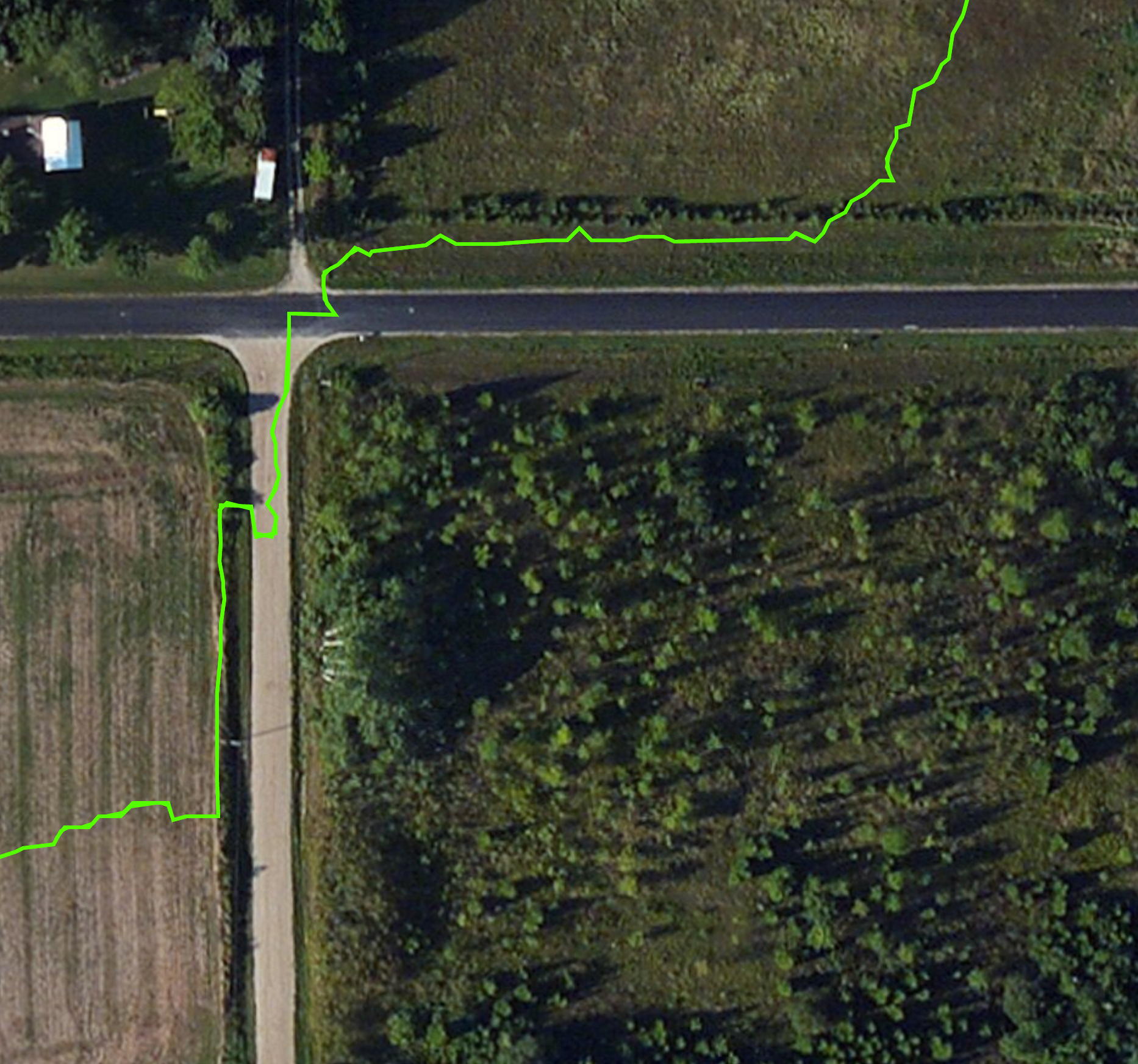
Detail of watershed boundary of Tuma Lake.
Bruce asks that people take a look at the watershed for their lake(s) and let him know immediately if they see something that doesn’t seem accurate (e.g., placement of culverts).
You can contact him at bruceriesterer@co.manitowoc.wi.us
Map images ©2017 Manitowoc County Soil & Water Conservation Department
AIS Monitoring Kits to Be Distributed May 30
Paul Skawinski, the AIS Citizen Monitoring Coordinator for the state will be coming to Cedar Lake on May 30, 2017, to talk about his program. At that time, he will also be distributing AIS monitoring kits to any lake that is interested in having one. He will only give one kit per lake due to the expense of each kit. If your lake would like additional kits, they would be available for $30 each. If you or someone from your lake will be attending, please let Dick Jens know by email or 920-286-2601. We have to have a count on the number of lakes attending (and if you want additional kits) so he knows how many kits to bring along. Time and place we will meet depends on how many people are coming and will be announced by May 19th. As each lake in the county is getting pressured by more invasive species, this will be a very important meeting to attend. Hope to see you there.
Expanded Lake Michigan lake trout harvest takes effect April 15
04/13/2017. MADISON, Wis. – Expanded lake trout harvest opportunities will take effect Saturday, April 15 in the Wisconsin waters of Lake Michigan thanks to an emergency rule approved by the Wisconsin Natural Resources Board.
The rule takes into account current lake trout populations including the reestablishment of natural reproduction in some refuge areas and is not expected to affect long-term restoration efforts, said Brad Eggold, Great Lakes district fisheries supervisor for the Wisconsin Department of Natural Resources. The new five fish daily bag limit was developed following an extensive angler engagement process that included seven public meetings with total attendance of 500.
Get Your License and Go Wild!
 Anglers are reminded that the new license year began April 1 for waters or species with a continuous open season. Licenses and stamps for the 2017 year are on sale now through GoWild.Wi.Gov. Fees for the 2017 license year remain the same as last year.
“Life Beneath the Ice”
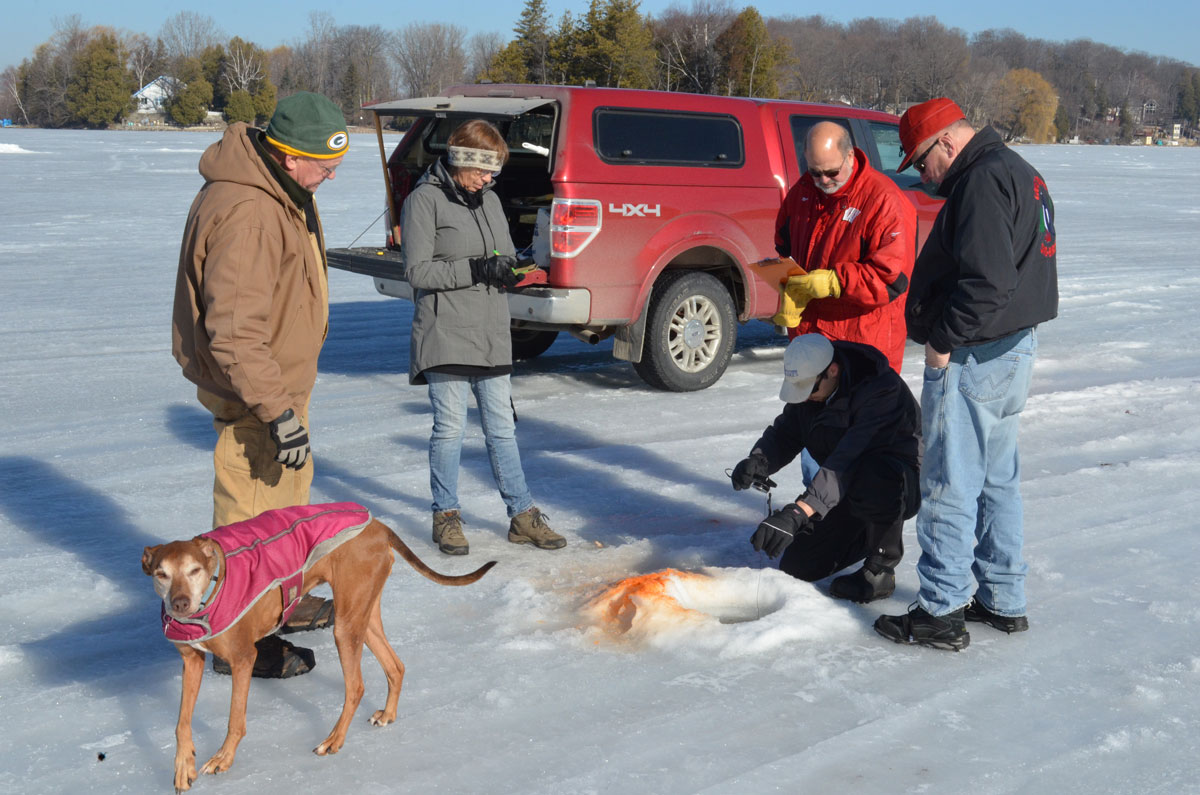
With ‘Betty’ looking at the photographer Scott Otterson: Dick Grossenbach, Hanna Edelglass, Paul Skawinski, Dick Jens and Phil Knauf.
An Event Report By MCLA Member Hanna Edelglass
March 7, 2017—On Friday, the 17th of February, Paul Skawinski, Coordinator of the Wisconsin Citizen Lake Monitoring Network, UW Extension Lakes Program University of Wisconsin; Stevens Point, hosted an all day Citizen Lake Monitoring Network meeting with volunteers, sponsored in conjunction with Sanitary District #1, Cedar Lake. The field event involved sampling aquatic invasive as well as native species, at Cedar Lake. This was an opportunity to predict, through holes drilled in well over a dozen places, what we can expect to do to keep our lakes healthy year round.
Emergency Lake Michigan Trout Rules in Effect
March 1, 2017—The Wisconsin Natural Resources Board today approved an emergency rule regarding bag limits and season length on lake trout for Lake Michigan. The rule increases lake trout daily bag limits to five 10″ fish on Lake Michigan waters with open season from March 1–Oct 31. The previous limit was two fish.
This does not change the regulations for the Mid Lake Reef Complex (see page 66 of Wisconsin’s Hook & Line guide) where there is NO open season. Read more
Paul Skawinski at Cedar Lake on Feb 17th
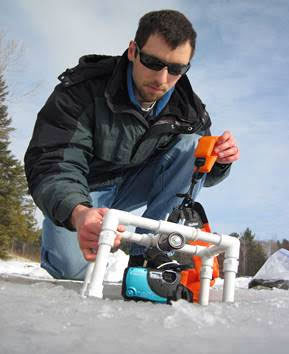
Updated Feb. 26, 2017—PAUL SKAWINSKI, Coordinator Wisconsin Citizen Lake Monitoring Network UW Extension Lakes Program University of Wisconsin-Stevens Point, sponsored in conjunction with Sanitary District #1, Cedar Lake. Originally published Feb. 14, 2017.
Paul will host a Citizen’s Lake Monitoring Network meeting with volunteers, and will resume the sampling at Cedar Lake on Friday, Feb. 17. Anyone wishing to observe should meet at the boat landing at 9:00am.. As the field events are subject to ice conditions, it is recommended that those attending verify times.